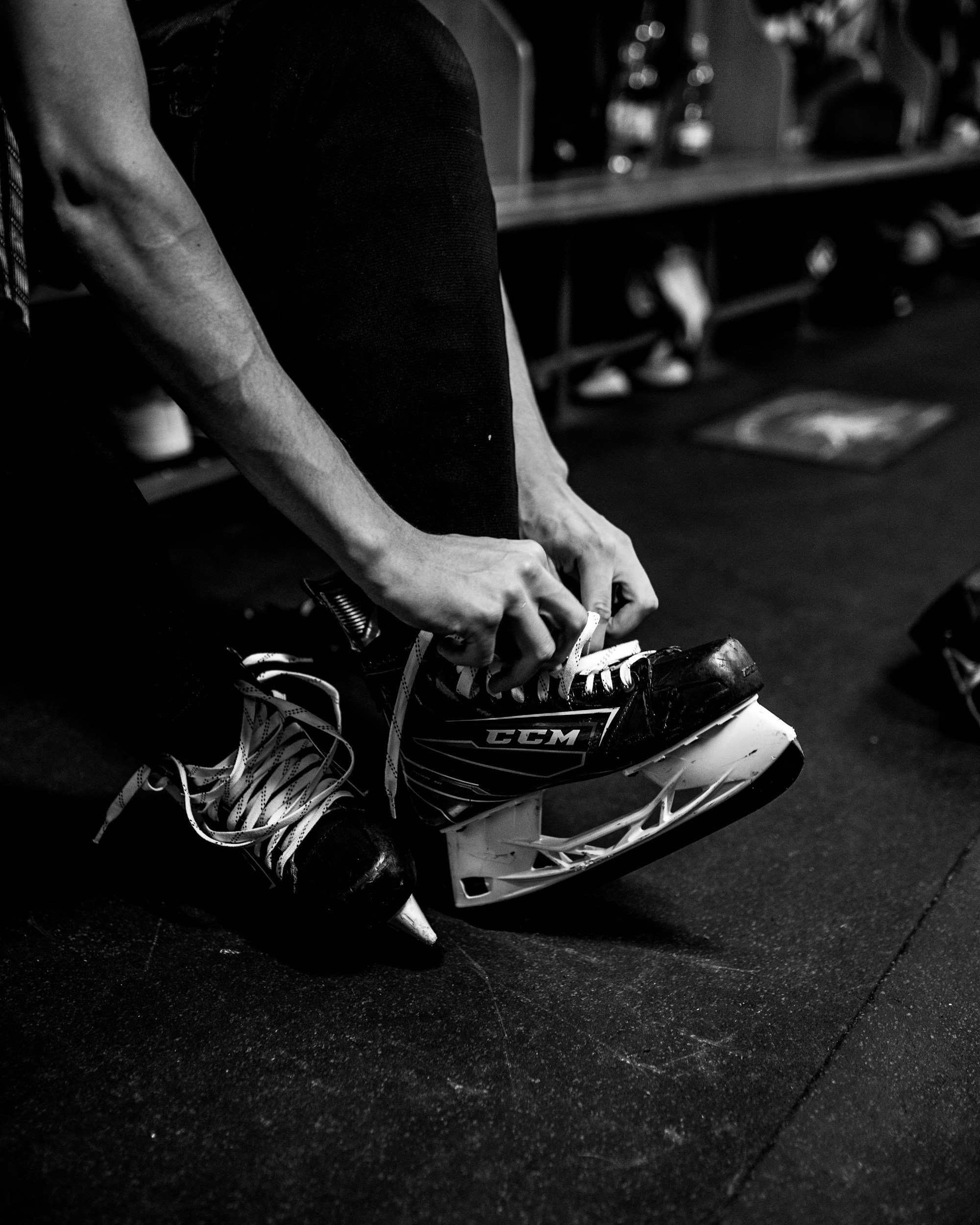
Alright, you know the basics now. Here comes the fun part.
Skating is about 90% of hockey, so this step always comes first: learning how to skate. You won’t need a stick or pads — just some skates (or you can rent some). Go to your local skating rink’s website and ask how to register for a Learn to Skate program.
Give yourself a pat on the back. You’ve taken the first step toward becoming a hockey player. This is where it begins. The next step is learning how to play hockey.
Youth players: Check the rink’s website and register for a Learn to Play clinic.
Adults: Look for a class labeled “Adult Rookie Class” or “Foundations”. This is where you’ll need a full set of equipment.
Buying hockey gear is pretty simple — but be ready for an empty bank account.
THE PRICES LISTED BELOW ARE THE BARE MINIMUM COSTS
Helmet with cage or visor: Youth players can expect $60–$90 USD. Adults: $70–$110 USD.
Neck guard: Youth: $10–$15 USD. Adults: $15–$25 USD.
Chest protector: Youth: $30–$45 USD. Adults: $70–$110 USD.
Elbow pads: Youth: $20–$30 USD. Adults: $45–$65 USD.
Pants: Youth: $40–$60 USD. Adults: $75–$110 USD.
Jock strap: Youth: $15–$25 USD. Adults: $20–$30 USD.
Shin pads: Youth: $20–$30 USD. Adults: $55–$80 USD.
Socks (to cover shin pads): Youth: $10–$15 USD. Adults: $13–$18 USD.
Skates: Youth/teens: $50–$80 USD. Adults: $90–$200 USD.
Stick: Go to a hockey shop and test whether a left- or right-handed stick feels more comfortable. Don’t just pick the one matching your writing hand — I do everything with my right hand but shoot with a left-handed stick. Youth: $50–$80 USD. Adults: $30–$50 USD.